
How Clay Shooting Began: A Deep Dive Into Its Origins
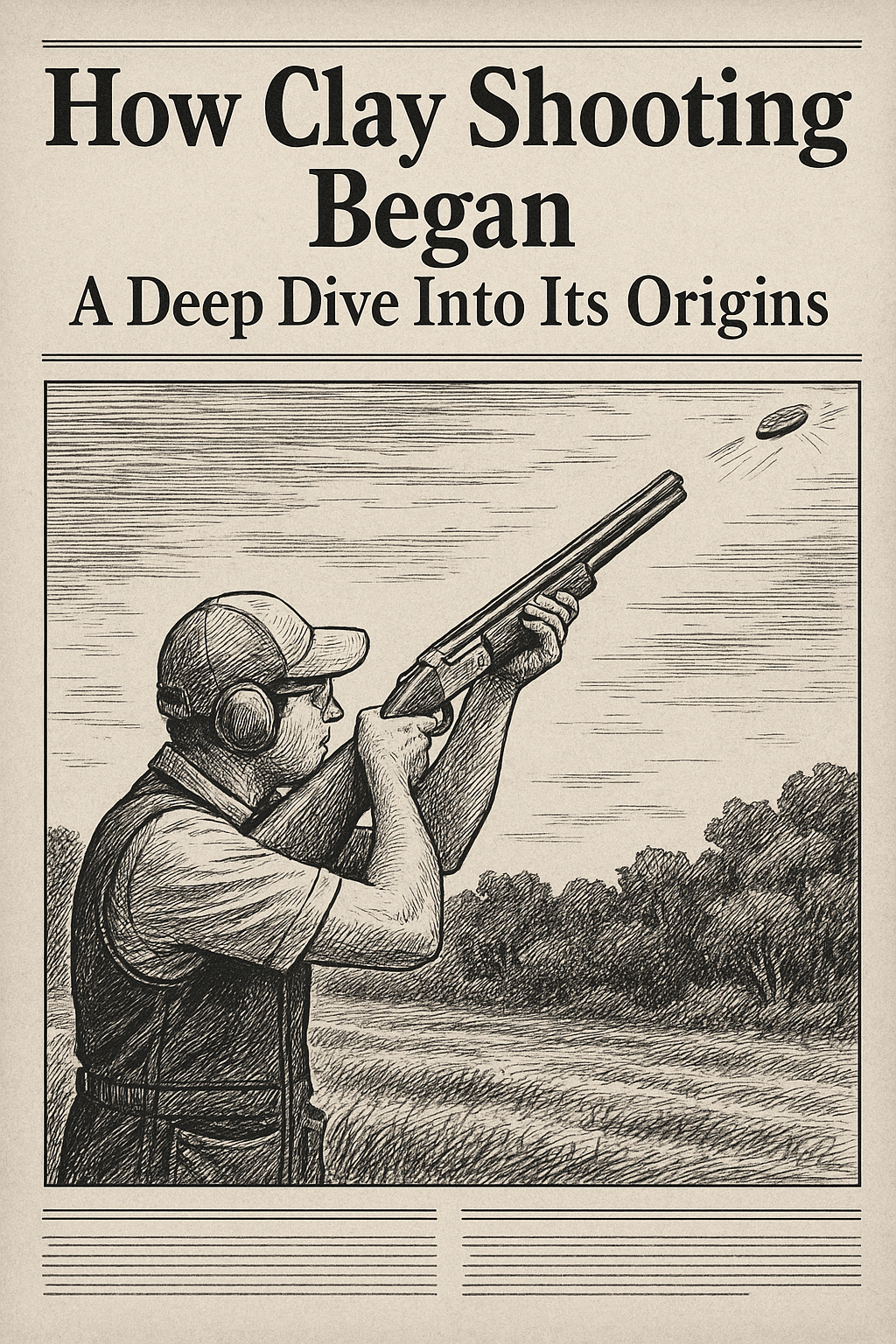
Clay shooting is one of the most respected and technically advanced shotgun sports in the world. Its foundations go back more than 150 years, shaped by innovation, tradition, and the transition from live-bird shooting to modern artificial targets. In French-speaking regions, the sport is still known as “tir aux plateaux”, highlighting its cultural and historical importance.
Early Beginnings Before Artificial Targets
Live-Bird Shooting as the First Competitive Format
Before clay existed, shooters trained using live pigeons released from mechanical traps. These events tested reflexes and precision but lacked fairness and standardization. Ethical concerns and unpredictable flight paths eventually pushed shooters to seek a consistent and humane alternative.
The Creation of the First Artificial Targets
Experiments with Early Substitutes
In the late 1800s, shooters tested:
- glass balls filled with feathers
- wooden discs
- fabric bags filled with lime
These innovations were steps forward but not ideal.
The Breakthrough: Pitch-and-Limestone Targets
Around 1880, the first pitch-and-limestone targets appeared. These “clay pigeons” made clay shooting possible. The idea quickly spread across Europe, where the discipline became known as tir aux plateaux, literally “shooting at plates/discs.”
The First Clay Shooting Grounds and Stands
By the early 20th century, standardized shooting grounds began to appear. Many of today’s technical terms originate from this era.
Names for Shooting Stands (EN + FR)
- Shooting Peg / Station – poste de tir
- Sporting Stand – stand de parcours
- Parcours Layout – parcours de chasse
- Compak Grid – grille compak
Early ranges were inspired by natural hunting terrain, creating a foundation for modern sporting.
Development of Target Trajectories
To simulate different gamebirds, course designers created diverse target paths.
Trajectory Types (EN + FR)
- Crosser – plateau traversant
- Looper – plateau en cloche
- Vertical Teal / Chandelle – plateau chandelle
- Rabbit – lapin roulant
- Incoming Bird – entrant
- Driven Bird – devant-derrière
- Battue – plateau battue
These trajectories remain core elements of sporting and compak sporting.
The Rise of Sporting
As shooters demanded more variety, sporting clays emerged as a discipline that imitated natural bird movement rather than predictable trap targets. In France, this discipline became known as parcours de chasse, emphasizing its hunting-inspired origins.
Sporting offered:
- multi-angle challenges
- outdoor terrains
- combinations of pairs (on-report and simultaneous)
- natural simulations
This philosophy defined the sport for decades to come.
Compak Sporting: A Modern Compact Format
To accommodate ranges with limited space, compak sporting was created. FITASC later formalized its rules.
Key Features of Compak Sporting
- 5 fixed shooting stations (cages)
- 6–8 traps placed in front
- clearly marked shooting grid
- fast shooting rhythm
- strict international rules
In French terminology, this includes:
- poste 1–5
- tir en cadence
- plateaux rapides
Compak sporting became a global discipline thanks to its accessibility and dynamic format.
The Role of International Organizations
Clay shooting’s growth was shaped by several major bodies:
Main Governing Organizations
- FITASC – Fédération Internationale de Tir aux Armes Sportives de Chasse
- CPSA – Clay Pigeon Shooting Association (UK)
- NSCA – National Sporting Clays Association (USA)
- ISSF – International Shooting Sport Federation
These organizations unified rules and established international competitions.
Notable Championships
- FITASC World Sporting Championship
- FITASC Compak Sporting World Cup
- NSCA National Championship
- British Open Sporting
- European FITASC Grand Prix
These events helped transform clay shooting into a professional sport.
Technological Advancements
Modern trap machines evolved significantly:
- automatic loading
- programmable flight paths
- long-range crossers
- wireless remote control
- multiple target types (midis, minis, battues, rockets)
Clays also became more consistent, eco-friendly, and available in different colors and sizes.
Modern Shooting Grounds and Infrastructure
Today’s ranges combine tradition with technology.
Common Range Structures
- Trap Towers (tours de lancement)
- Raised Shooting Platforms (passerelles de tir)
- Woodland parcours
- Tournament-ready compak cages
- Multi-directional sporting layouts
Regardless of format, the essence of clay shooting remains unchanged: precision, timing, and mastery of the flying target.
Conclusion
Clay shooting evolved from live-bird events into a highly technical and internationally recognized sport. Its development was shaped by:
- artificial target innovation
- diverse trajectories
- new shooting stand designs
- global competition systems
- strong cultural traditions, including tir aux plateaux
From primitive traps to world championships, clay shooting continues to grow while honoring the heritage of its origins.

 ClayMaster Hub