Discovering a Caribbean Clay Shooting Destination

Nestled in the lush greenery of Capesterre-Belle-Eau on the island of Guadeloupe, the Ball Trap Club Capesterrien (BTCC) has quickly become one of the region’s most dynamic venues for clay target shooting. Known locally as Ball-Trap Club Capesterrien, the facility combines a natural Caribbean setting with infrastructure developed specifically for sporting clays and compak sporting enthusiasts.
For shooters seeking fresh terrain, challenging layouts, and a vibrant club atmosphere, BTCC offers a truly unique experience.


A Setting Built for Clay Target Shooting

The club is located in the FéFé / Îlet Pérou area, surrounded by tropical vegetation, rolling hills, and open clearings that naturally support a wide range of clay trajectories.
This environment is particularly well suited for disciplines where reading the landscape is part of the challenge. Whether working through a compact shooting grid or navigating longer sporting routes, shooters benefit from:

  • shifting light between sun and shade
  • natural obstacles that shape flight paths
  • varied elevation ideal for rising, falling, and crossing targets
  • a mix of open ground and vegetation for realistic, hunting-style presentations

The Caribbean landscape is not just beautiful — it actively enhances the shooting experience.


Sporting Clays: Ten Parcours de Chasse

One of BTCC’s standout features is the presence of 10 parcours de chasse, the French term widely used for sporting-style clay shooting routes.

These courses are designed to simulate real hunting conditions, offering shooters opportunities to practice:

  • long crossers set against hillside backdrops
  • fast, direct targets breaking through open lanes
  • quartering birds that demand precise timing
  • technical angles shaped by natural vegetation

Because the courses are spread across different zones of the club’s terrain, each one feels distinct. This variety makes BTCC attractive not only for regular practice but also for competitive events and training camps.


Four Dedicated Compak Sporting Zones

For shooters who enjoy the intense rhythm and precision of compak sporting, BTCC features four dedicated compak layouts.
These compact grids are designed according to the principles of the discipline:

  • multiple traps positioned within a fixed area
  • controlled shooting lanes and defined limits
  • simultaneous and report pairs
  • fast transitions between targets
  • consistent difficulty maintained across squads

The combination of experienced course-setters and a terrain that naturally supports multi-directional target lines has helped the club build a strong local reputation for technical compak stages.


A Growing Hub for Competitions

BTCC has hosted several major regional events, drawing shooters from:

  • Guadeloupe
  • Martinique
  • French Guiana
  • mainland France

These competitions have highlighted the club’s ability to manage large numbers of participants, maintain reliable trap operation, and deliver technical challenges appropriate for higher-level shooters.

The friendly, community-focused atmosphere of the club also makes competition weekends lively and memorable — part sporting event, part island gathering.


Training, Safety, and Accessibility

The club follows the structure and safety principles of French shooting federations, offering:

  • supervised initiation sessions for newcomers
  • certified instructors for skill development
  • equipment rental for guests
  • license options for regular members
  • mandatory hearing and eye protection

Beginners can start safely, and experienced shooters have access to serious training environments — a balance not every club achieves.


Why Ball Trap Club Capesterrien Stands Out

What makes BTCC special is its blend of:

  • Caribbean landscape that enhances clay flight paths
  • sporting and compak infrastructure rarely found in island regions
  • technical course design suitable for developing shot precision
  • community atmosphere where shooters of all levels feel welcome

Whether you’re exploring new sporting routes, refining your compak timing, or simply enjoying the scenery between rounds, BTCC offers a combination of challenge and charm that’s hard to find elsewhere.


Conclusion

The Ball Trap Club Capesterrien is more than just a shooting range — it’s a Caribbean destination for anyone passionate about clay target sports. With its ten sporting courses, four compak grids, and growing calendar of events, the club provides a rich environment for practice, progression, and community.
For shooters visiting Guadeloupe or looking for a fresh training location, BTCC is absolutely worth placing on the map.

Рубрика: Uncategorized | Оставить комментарий

A Technical Overview of a Northern Thailand Venue for Sporting and Compak Disciplines

Sporting and compak shooting require specific environmental conditions, precise layout planning, and consistent mechanical performance of multi-trap systems. In northern Thailand, the facility known as 333 Shooting Range and Bann Medbua 333 Shooting Range, locally referred to as สนามยิงปืน 333 แม่ริม, offers a terrain profile and layout potential that align well with the technical demands of both sporting clays and compak sporting formats.


Terrain and Layout Characteristics

The range is located in Mae Rim, an area with mixed vegetation, rolling elevations, and open grass sectors bordered by dense treelines. These natural features allow course designers to create:

  • variable target windows influenced by vegetation and hillside contours
  • elevation-driven trajectories (rising, falling, and flat-line crossers)
  • irregular kill-zone geometry, especially on longer crossing birds
  • setback angles that challenge reaction timing and footwork stability

Such terrain diversity allows for more realistic simulations of hunting-style presentations, even on engineered layouts typical for sport shooting.


Sporting Clays Potential

Although the facility is not a full-scale dedicated sporting grounds with dozens of permanent stands, the geography and space allow for the creation of technical sporting segments.

Key sporting-capable elements include:

  • long-range crossers across open valleys
  • quartering birds that transition from sunlight to shade
  • battue-style vertical breaks when placed against treeline backdrops
  • low, high, and mid-height trajectories made possible by tiered elevation levels

This enables designers to implement multi-stand sporting routes using portable or semi-fixed traps, ideal for events where natural terrain is used to shape shot difficulty.


Compak Sporting Capabilities

The strongest side of the venue lies in its ability to support high-density compak sporting layouts with strict geometric control. A compak grid typically requires:

  • 5–6 traps operating within a fixed zone
  • clearly defined shooting lanes and sector limits
  • stable hold points and predictable transition paths
  • simultaneous, report, and delayed-release pairs
  • fast recovery time between presentations

This location provides sufficient space for:

  • tight compak boxes where shooters must manage muzzle control and footwork
  • cross/over-cross trajectories, forcing shooters to adjust lead and maintain line discipline
  • reaction-intense pairs, especially when using fast midi or rabbit trajectories
  • distance-controlled kill zones, which are essential for standardized scoring difficulty

These characteristics make the range technically compatible with international-level compak expectations.


Mechanical Consistency and Trap Deployment

The facility has a proven ability to handle multi-machine setups during official events, which indicates:

  • reliable trap cycle timing
  • consistent release delay calibration
  • stable target flight integrity under repeated launches
  • capacity to run multiple presentations per squad without mechanical drop-off

Such reliability is essential for compak sporting, where even slight variations in timing or throw angle can alter the intended technical difficulty of a stage.


Event Hosting Experience

The venue, known as 333 Shooting Range / Bann Medbua 333 Shooting Range (สนามยิงปืน 333 แม่ริม), has been selected for several high-profile clay target events in northern Thailand. While the focus remains on compak sporting, the infrastructure and organization demonstrate:

  • skilled field crews experienced in trap realignment and maintenance
  • competent stage setters familiar with advanced trajectory combinations
  • logistical readiness for squads cycling through multiple grids
  • consistent enforcement of line safety, pre-mount rules, and shooting order

This provides shooters with conditions comparable to international compak-standard competitions.


Training Advantages for Shooters

The technical environment supports shooters working on:

  • lead optimization on fast crossers and quartering targets
  • hold point discipline when lanes are narrow and sector limits strict
  • target reading at varying depths due to terrain contrast
  • transition efficiency between fast report pairs
  • mount timing in pre-mount and dismount scenarios, depending on ruleset

Combined with natural backdrops and controlled shooting geometry, the venue is highly suitable for both competitive practice and structured coaching sessions.


Conclusion

333 Shooting Range / Bann Medbua 333 Shooting Range (สนามยิงปืน 333 แม่ริม) stands out as a technically capable location for sporting and compak sporting activities in northern Thailand. Its landscape, mechanical stability, and event-proven organizational structure provide shooters with a reliable environment for advanced training and competition-level performance. The combination of natural terrain and structured compak grids makes it a valuable destination for athletes seeking professional-quality clay target shooting conditions.

Рубрика: Uncategorized | Оставить комментарий

A Premier High-Country Destination for Sporting & Compak Shooting

Sporting clays continues to attract shooters who want more than predictable trap or skeet trajectories. It replicates the unpredictability of real hunting environments, offering dynamic, fast-changing target presentations that challenge both beginners and experts. Set in the Australian high country, Cooma Sporting Clays provides an authentic landscape where sporting and compak shooters refine their skills across a wide variety of target types and shooting angles.

This article explores why this elevated bushland range has become a top destination for those searching for long-form sporting clays experiences, advanced compak layouts, and high-elevation shotgun shooting conditions.


The Landscape That Shapes the Experience

At over 1,200 meters above sea level, the rugged terrain surrounding the Cooma Field & Game Club creates a natural training ground where light, elevation, and vegetation directly influence each stage.

Key Environmental Features:

  • Rocky ridges used to create steep incoming and outgoing targets
  • Narrow gullies ideal for fast crossers and looping birds
  • Native bushland producing constantly changing shadows and visibility
  • Uneven ground offering natural shooting platforms and vantage points

This terrain diversity is what allows course designers to build long sporting routes and dense compak grids — keeping shooters sharp and constantly adapting.


Sporting Clays: A Complete, Realistic Simulation

Variety of Target Types

The range offers a full suite of clay targets essential for realistic sporting clays shooting:

  • Standard and Midi clays for classic mid-range shots
  • Battue targets that flip abruptly mid-flight
  • Rabbits rolling across the ground at unpredictable bounce angles
  • Chandelles arcing high before dropping steeply
  • Super-minis with fast, twitchy movement

These targets simulate ducks, quail, pigeons, rabbits, and even aerial evasive movement.

  • advanced sporting clays layouts in natural terrain
  • high-difficulty crossing birds for experienced shooters
  • elevation-based shotgun shooting techniques

Compak Sporting: Precision in a Compact Space

Compak sporting is known for its intensity — smaller space, tighter angles, and quicker decisions. The Cooma Sporting Clays Range excels at this through a carefully engineered trap configuration that supports:

  • Multiple traps per stand
  • Simultaneous, report, and instant-release pairs
  • Predefined shooting grids and limited visual zones
  • Rapid transitions between target windows

This environment strengthens fundamental compak skills such as:
✔️ reading fast-changing trajectories
✔️ adjusting footwork within confined space
✔️ maintaining consistent gun mount under pressure

  • compact sporting shooting layouts with multi-trap synchronization
  • technical compak target sequences for competition preparation

Why the Range Appeals to All Skill Levels

For Beginners

  • Guided practice sessions
  • Controlled stands with predictable angles
  • Safe and supportive environment

For Intermediate Shooters

  • Mixed trajectory rounds
  • Exposure to different terrains
  • Combination of simple and complex pairs

For Experienced Competitors

  • High-difficulty battues and looping birds
  • Long crossing targets across valleys
  • Elevation-based target reading challenges
  • Competition-level compak grids with rapid cycling

Competitive Potential and Course Variety

Cooma’s course designers regularly rotate target machines, adjust angles, change release delays, and build new stage layouts. This ensures that:

  • No two visits feel the same
  • Shooters cannot memorize routines
  • Each course reflects real hunting unpredictability

The range is also capable of hosting large-scale sporting and compak competitions thanks to its infrastructure and terrain.

Advanced Keywords Included:

  • dynamic sporting clays course rotation for continuous shooter development
  • competition-grade compak sporting in Australian high country

Final Thoughts

With its elevated terrain, natural bushland, and intelligently designed stage layouts, this high-country venue has become a standout destination for both sporting and compak shooting enthusiasts. Whether a visitor aims to refine their long-range crossing techniques, master compak precision, or train for competition-level events, the environment provides an unmatched, rewarding experience.

Рубрика: Uncategorized | Оставить комментарий

Full Season Overview

International Compak Sporting Competitions 2026: Full Season Overview

The 2026 season for Compak Sporting is shaping up to be one of the most active and technically demanding years in the sport’s history. With a growing number of international events and a packed competitive calendar, shooters from around the world can expect a season filled with high-level challenges, diverse course designs, and intense rivalry on every range.

Compak Sporting continues to gain momentum globally thanks to its dynamic format, precise target presentations, and the increasing professionalism of both organizers and athletes. International competitions are now held across multiple regions, offering shooters a chance to test their skills against top-level opponents in a standardized, technically complex environment.

Below is an overview of what to expect from the international Compak Sporting competitions of 2026, including major events, season structure, and competitive trends.
Full schedules and updated dates can be viewed at the official calendar link you provide.


What Defines the International Compak Sporting Calendar

The annual international calendar traditionally includes:

● Continental Championships

Large-scale events featuring the strongest athletes from multiple regions. These competitions often introduce the most technical course designs and set the benchmark for the year.

● Grand Prix Tournaments

A series of high-prestige events typically consisting of 200-target formats. These tournaments attract elite shooters seeking ranking points, match preparation, and international experience.

● Open International Competitions

Accessible to a broader range of competitors, these events serve as both development platforms and qualification opportunities ahead of major championships.

● Technical Events and Special Stages

Some competitions focus on high-precision target engineering, demanding rapid decision-making and consistent gun-mount execution. These tournaments highlight the most advanced aspects of Compak Sporting.


What Athletes Should Expect in 2026

The density of tournaments means shooters must balance:

  • Scheduling and travel planning
  • Technically varied layouts
  • High-volume training cycles
  • Consistency across multiple competitive environments

The 2026 season places strong emphasis on technical mastery, rapid adaptation, and strategic preparation. As Compak Sporting continues to evolve, course designers are introducing more complex trajectories, delayed visual pickups, multi-window presentations, and tighter time pressure within each stand.

This makes 2026 a key year for athletes aiming to sharpen both precision and decision-making speed.


Where to Find the Full Competition List

For the complete list of all international Compak Sporting competitions in 2026 — including dates, locations, registration rules, and technical details — please refer to the official schedule:

This ensures you always have the most accurate and up-to-date information throughout the season.

Рубрика: Uncategorized | Оставить комментарий

A Modern Look at Ball-Trap, Community, and Craft

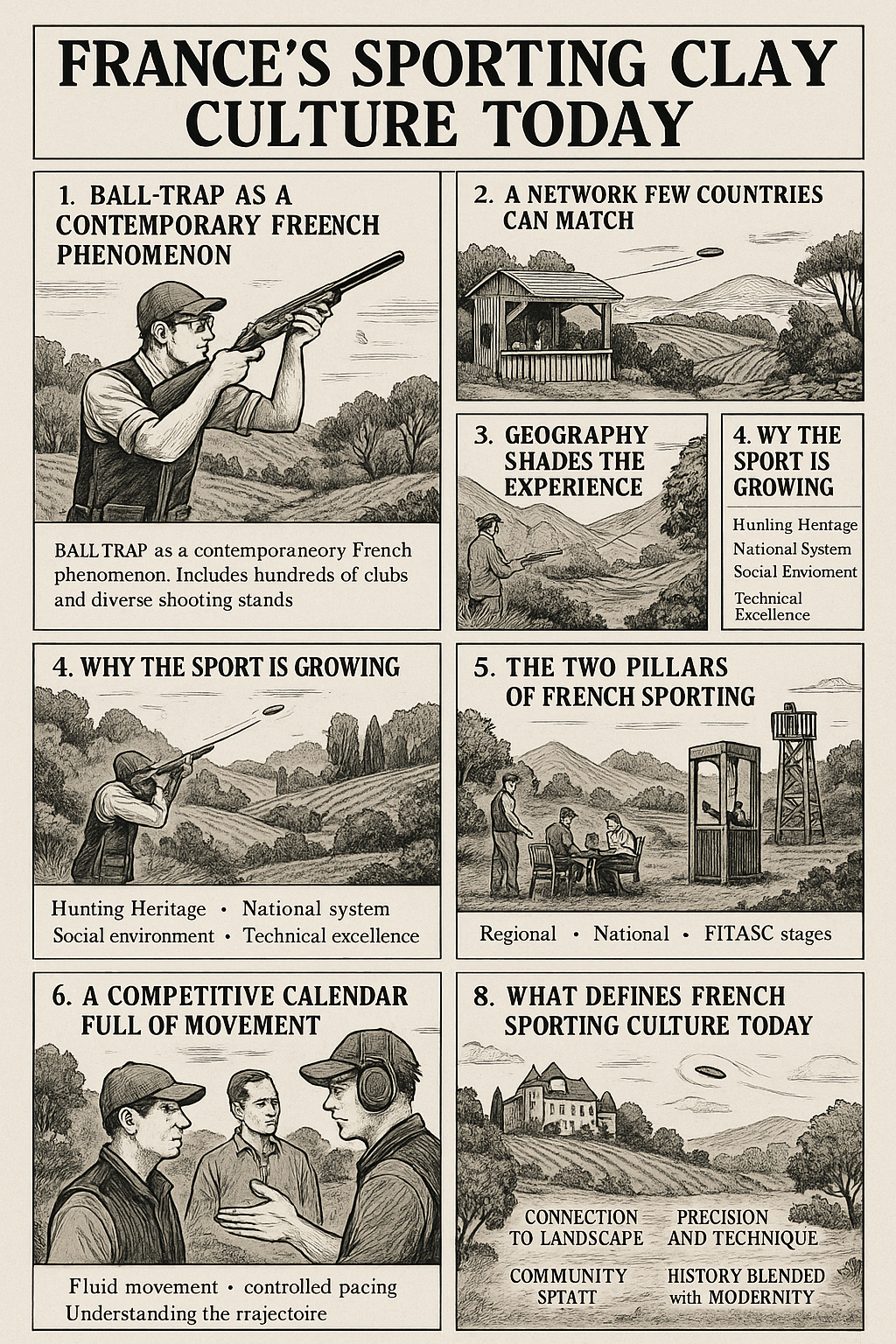
France’s Sporting Clay Culture Today: A Modern Look at Ball-Trap, Community, and Craft

In France, clay shooting has grown into something far beyond a recreational pastime. Known collectively as ball-trap, the sport occupies a unique space in French outdoor culture — part tradition, part technical discipline, part social ritual.

Rather than being confined to shooting ranges alone, sporting clays in France have expanded into an entire ecosystem of clubs, athletes, coaches, landscapes, and long-standing habits that define how the French approach precision sports.


1. Ball-Trap as a Contemporary French Phenomenon

The term ball-trap is broad and inclusive. It covers every clay-target discipline practiced across the country — from the Olympic fosses to skeet fields and hélices. But the strongest cultural presence today comes from two disciplines:

  • Parcours de Chasse (PC) — natural, terrain-driven sporting
  • Compak Sporting (CS) — structured, compact layouts with controlled shooting sectors

Together, they shape how modern France experiences clay shooting: outdoors, authentic, technical, and distinctly its own.


2. The Infrastructure: A Network Few Countries Can Match

France has quietly built one of Europe’s largest and most accessible clay-shooting networks.
With hundreds of active shooting clubs scattered across the map, the sport is easy to reach, even for beginners.

A typical French stand de ball-trap often blends multiple elements:

  • Cages for Compak Sporting
  • Hillsides or woodlands for Parcours de Chasse
  • Launch towers, ravines, and forest corridors
  • Diverse machines generating battue, chandelle, lapin roulant, and other French-style trajectories
  • Terraces, small cafés, and social spaces where shooters gather between rounds

This combination of sport and social atmosphere is a defining feature of the French approach.


3. Geography Shapes the Experience

Unlike many countries where sporting layouts rely on artificial obstacles, French courses often use natural terrain as the primary design element.

This means shooters may encounter:

  • targets rising along rocky slopes,
  • crossers flying low between trees,
  • battues streaking over open grassland,
  • rabbits running along vineyard paths.

The result is a sporting culture intimately tied to the land.


4. Why the Sport Is Growing

Several factors contribute to the continuous rise of sporting clays in modern France:

A deep hunting heritage

Many participants come from the hunting community, using PC and CS as training tools during the off-season.

A structured national system

France’s federations and clubs maintain a strong calendar of regional and national events, encouraging constant participation.

A welcoming social environment

Shooters frequently stay long after their rounds are finished, discussing techniques, equipment, and memorable targets.

A focus on technical excellence

French shooters often prioritize fundamentals — smooth épaulement, clean ligne de mire, and thoughtful avance — creating a disciplined and methodical culture of practice.

FITASC’s influence

With FITASC headquartered in France, the country naturally maintains a leadership role in rules, standards, and international events.


5. The Two Pillars of French Sporting

Parcours de Chasse (Sporting)

PC in France reflects the philosophy of “nature as the course.” Instead of forcing the landscape to fit the discipline, the discipline adapts to the landscape.
This is where shooters encounter some of the most creative trajectories in Europe — battues that flip unpredictably, high tower birds that challenge timing, and long crossers shaped by wind.


Compak Sporting

Compak, by contrast, concentrates the sporting experience into a smaller area.
Five posts, clearly defined boundaries, and a constant flow of:

  • simultaneous pairs,
  • on-report pairs,
  • rapid rabbits,
  • low crossers,
  • and vertical chandelles.

The format is dynamic, rhythmic, and popular among both novices and competitive shooters.


6. A Competitive Calendar Full of Movement

France’s tournament system is one of the most active on the continent.
Throughout the year, clubs host:

  • regional competitions,
  • club championships,
  • national PC and CS events,
  • FITASC stages and qualifiers.

The variety of terrains and course-setting styles ensures that no two events feel the same.


7. A Distinct Shooting Philosophy

The French shooting style emphasizes:

  • fluid movement
  • controlled pacing
  • understanding the trajectory
  • avoiding sudden or exaggerated motions

Coaches often stress reading the target rather than forcing the shot.

A commonly shared idea among French instructors is:

“The shot should follow the target’s logic, not your impatience.”

This mindset shapes how shooters train, compete, and discuss their sport.


8. What Defines French Sporting Culture Today

The essence of modern French sporting can be summarized through several pillars:

  • Connection to landscape — courses that breathe with the terrain
  • Community spirit — clubs as social centers
  • Precision and technique — a methodical, thoughtful approach
  • History blended with modernity — FITASC heritage meets contemporary practice
  • Aesthetic appreciation — clay shooting seen as a craft, not just an activity

In France, sporting clays functions almost like a cultural language — something understood intuitively by communities across the country.


Conclusion

The modern culture of sporting clays in France stands at the intersection of tradition, terrain, and technique.
It is shaped by a widespread network of clubs de ball-trap, by shooters who value precision, and by a national character that treats clay shooting as a refined craft rather than a simple sport.

Whether through Parcours de Chasse or Compak Sporting, France continues to define a distinct, influential, and deeply rooted approach to clay shooting — one that blends authenticity with innovation and remains one of the strongest in Europe.

Рубрика: Uncategorized | Оставить комментарий

The Birth of Compak Sporting

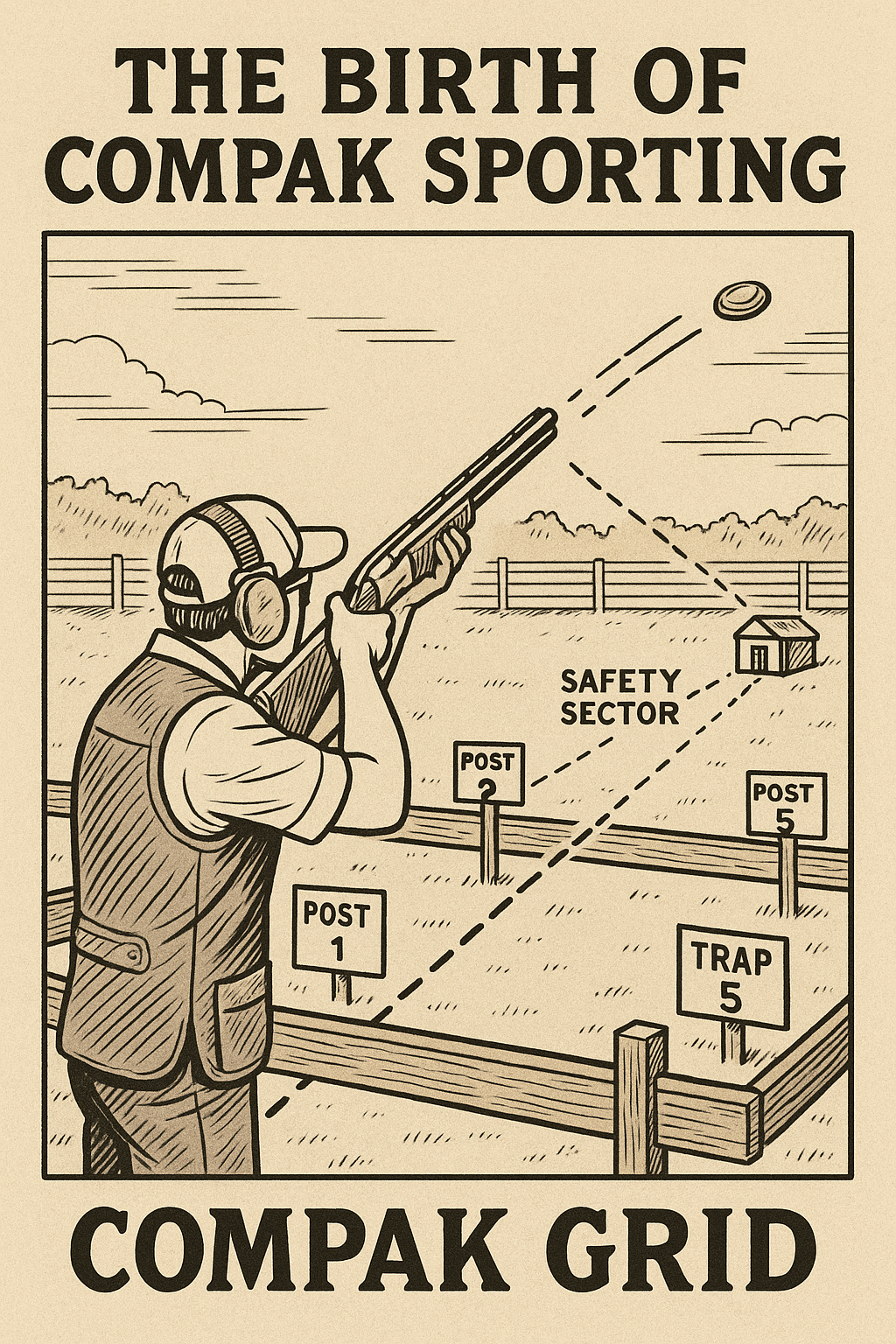
The Birth of Compak Sporting: Why the Sport Needed a Compact Format

Compak sporting stands today as one of the most dynamic and accessible disciplines within the world of clay shooting. Although closely connected to traditional sporting clays, compak sporting is not simply a simplified version of the sport. It emerged as a response to the logistical, spatial, and competitive challenges that clubs and shooters faced as clay sports expanded worldwide. In French-speaking regions, the discipline often appears under terms like “compak sportif”, parcours compact, or within FITASC documents as part of “tir aux plateaux”.

This article explores how compak sporting was born, why it became necessary, and how it transformed into a global discipline governed by strict standards and celebrated worldwide.


Early Context: The Limitations of Traditional Sporting

Large fields, large routes, large costs

Traditional sporting clays (or sporting parcours de chasse) grew rapidly throughout the 20th century. The discipline required:

  • wide natural areas
  • long walking routes
  • multiple traps spread across terrain
  • complex logistics

While this created variety and realism, it also introduced several difficulties for clubs and organizers.

Growing pains of an expanding sport

As the sport spread across Europe and later North America, new problems surfaced:

  • many clubs lacked space
  • urban and suburban shooting grounds struggled to host large parcours
  • competitions were slow and difficult to standardize
  • weather often interrupted long courses
  • international rules varied dramatically

The sport needed a second format: faster, more compact, easier to build, and globally consistent.


The First Attempts to Miniaturize Sporting

Early experiments

Before compak sporting became an official discipline, several clubs in France, Italy, and the UK experimented with:

  • short parcours
  • minimalistic layouts
  • single-zone shooting frames
  • simplified trap arrangements

Shooters often referred to these as “mini sporting”, “parcours réduit”, or “five-position layouts”.

These prototypes served as the blueprint for what would later become compak sporting.


The Moment FITASC Stepped In

The true birth of compak sporting began when FITASC (Fédération Internationale de Tir aux Armes Sportives de Chasse) recognized the need for a compact, globally unified format.

FITASC’s vision

FITASC aimed to create a discipline with:

  • fixed rules
  • repeatable course design
  • equal conditions worldwide
  • high sporting quality
  • limited spatial requirements

This led to the introduction of the compak grid — a set of geometric rules defining the exact shooting area, angles, safety limits, and placement of traps.


What Makes Compak Sporting a Unique Discipline

1. A Clearly Defined Shooting Grid

Compak sporting takes place inside a rectangular, fenced grid known in French as the “grille compak”.
Inside this grid are:

  • five shooting posts (postes de tir 1–5)
  • safety sector lines
  • trap placement zones

This structure ensures universal safety and fairness.

2. Multi-trap diversity within a compact space

Although compact, each field features:

  • 6 to 8 traps
  • multiple angles (left, right, central)
  • rabbits (lapins roulants)
  • battues (plateaux battue)
  • chandelle/vertical teal (plateau chandelle)

The variety mimics full sporting without requiring large land areas.

3. Faster and more dynamic competitions

Unlike traditional sporting:

  • shooters remain in one zone
  • transitions between posts are immediate
  • pairs are thrown rapidly
  • spectators can observe the entire layout

These qualities made compak ideal for intense, exciting competitions.


Why the Sport Needed a Compact Format

Space Efficiency

Compak fields can fit into:

  • small rural clubs
  • suburban environments
  • multi-sport complexes
  • temporary competition sites

Easier Organization

A full competition can run:

  • with fewer volunteers
  • in limited time
  • under controlled safety conditions

Standardization

Compak sporting allowed FITASC to guarantee consistent rules globally, something traditional sporting struggled with due to its free-form nature.

Accessibility

The format opened the door for:

  • beginners
  • youth programs
  • clubs with limited budgets
  • urban shooting communities

Compak provided a new entry path into the world of clay shooting.


Key Terms That Define the Discipline

Posts / Postes — fixed shooting positions
Compak Grid / Grille Compak — defined shooting area
Pairs (On-Report / Simultaneous) — timing-based clay releases
Dead Zone / Zone Neutre — area where shooting is prohibited
Safety Sector / Secteur de sécurité — angles marked for safe shooting

These terms created a technical vocabulary that reshaped the discipline.


A Discipline Born From Necessity

“Compak sporting did not replace sporting. It completed it.” – FITASC Technical Committee

By solving practical limitations — space, logistics, standardization — compak sporting became a modern answer to the needs of a growing sport. Within a decade of its formalization, it earned its place as a full international discipline.


Global Expansion and Major Competitions

Compak sporting is now part of major competitions worldwide:

  • FITASC Compak Sporting World Cup
  • FITASC European Compak Championships
  • National Compak Championships (various countries)
  • Grand Prix FITASC Series

The sport has grown thanks to its accessibility, structure, and excitement.


Compak Sporting Today: A Perfect Balance

Modern compak sporting combines:

  • the tactical depth of sporting
  • the dynamics of fast-paced shooting
  • the precision of standardized layouts
  • the universal accessibility of compact ranges

It is now one of the fastest-growing clay sports disciplines in the world.

Рубрика: Uncategorized | Оставить комментарий

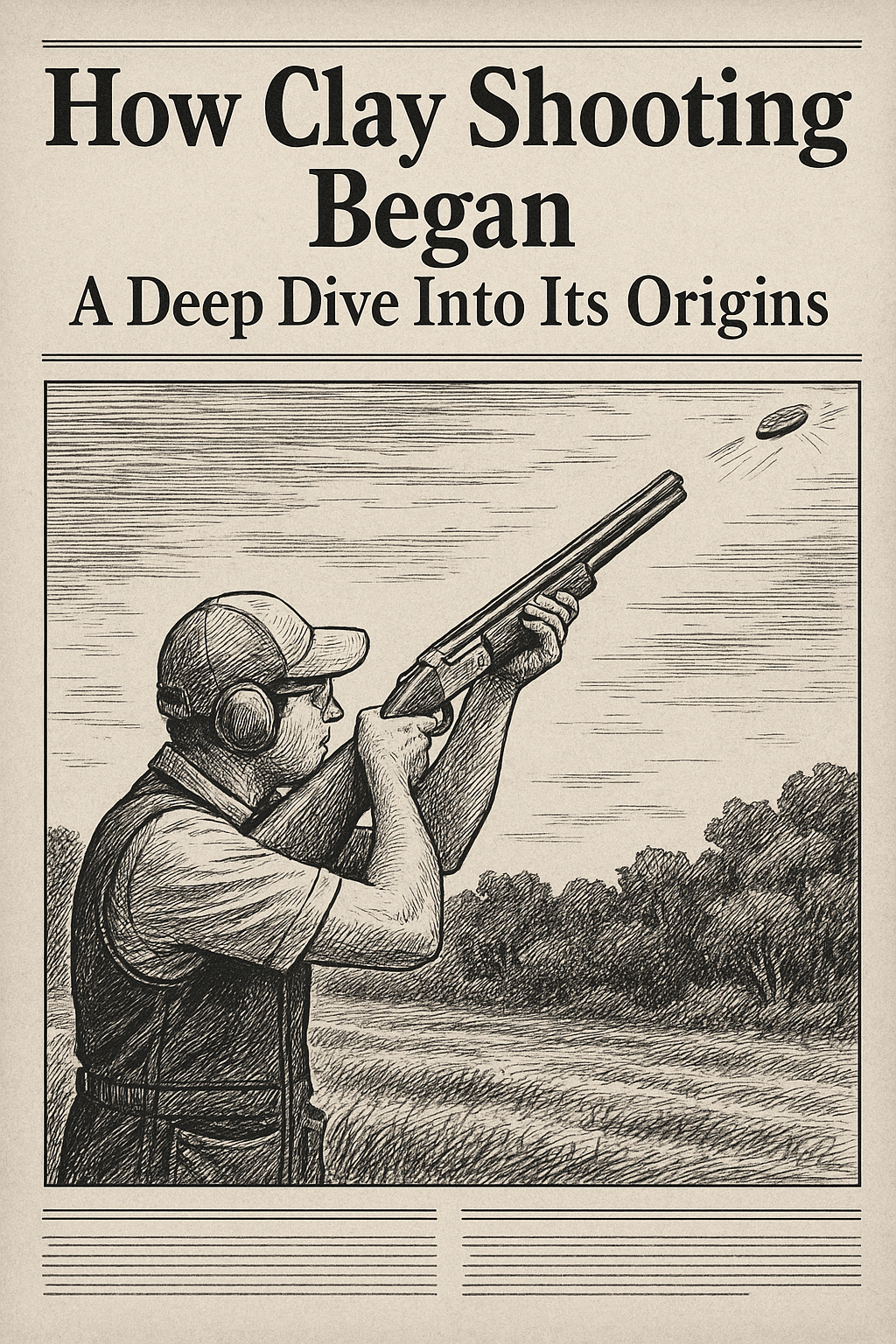
How Clay Shooting Began: A Deep Dive Into Its Origins

How Clay Shooting Began: A Deep Dive Into Its Origins

Clay shooting is one of the most respected and technically advanced shotgun sports in the world. Its foundations go back more than 150 years, shaped by innovation, tradition, and the transition from live-bird shooting to modern artificial targets. In French-speaking regions, the sport is still known as “tir aux plateaux”, highlighting its cultural and historical importance.


Early Beginnings Before Artificial Targets

Live-Bird Shooting as the First Competitive Format

Before clay existed, shooters trained using live pigeons released from mechanical traps. These events tested reflexes and precision but lacked fairness and standardization. Ethical concerns and unpredictable flight paths eventually pushed shooters to seek a consistent and humane alternative.


The Creation of the First Artificial Targets

Experiments with Early Substitutes

In the late 1800s, shooters tested:

  • glass balls filled with feathers
  • wooden discs
  • fabric bags filled with lime

These innovations were steps forward but not ideal.

The Breakthrough: Pitch-and-Limestone Targets

Around 1880, the first pitch-and-limestone targets appeared. These “clay pigeons” made clay shooting possible. The idea quickly spread across Europe, where the discipline became known as tir aux plateaux, literally “shooting at plates/discs.”


The First Clay Shooting Grounds and Stands

By the early 20th century, standardized shooting grounds began to appear. Many of today’s technical terms originate from this era.

Names for Shooting Stands (EN + FR)

  • Shooting Peg / Stationposte de tir
  • Sporting Standstand de parcours
  • Parcours Layoutparcours de chasse
  • Compak Gridgrille compak

Early ranges were inspired by natural hunting terrain, creating a foundation for modern sporting.


Development of Target Trajectories

To simulate different gamebirds, course designers created diverse target paths.

Trajectory Types (EN + FR)

  • Crosserplateau traversant
  • Looperplateau en cloche
  • Vertical Teal / Chandelleplateau chandelle
  • Rabbitlapin roulant
  • Incoming Birdentrant
  • Driven Birddevant-derrière
  • Battueplateau battue

These trajectories remain core elements of sporting and compak sporting.


The Rise of Sporting

As shooters demanded more variety, sporting clays emerged as a discipline that imitated natural bird movement rather than predictable trap targets. In France, this discipline became known as parcours de chasse, emphasizing its hunting-inspired origins.

Sporting offered:

  • multi-angle challenges
  • outdoor terrains
  • combinations of pairs (on-report and simultaneous)
  • natural simulations

This philosophy defined the sport for decades to come.


Compak Sporting: A Modern Compact Format

To accommodate ranges with limited space, compak sporting was created. FITASC later formalized its rules.

Key Features of Compak Sporting

  • 5 fixed shooting stations (cages)
  • 6–8 traps placed in front
  • clearly marked shooting grid
  • fast shooting rhythm
  • strict international rules

In French terminology, this includes:

  • poste 1–5
  • tir en cadence
  • plateaux rapides

Compak sporting became a global discipline thanks to its accessibility and dynamic format.


The Role of International Organizations

Clay shooting’s growth was shaped by several major bodies:

Main Governing Organizations

  • FITASC – Fédération Internationale de Tir aux Armes Sportives de Chasse
  • CPSA – Clay Pigeon Shooting Association (UK)
  • NSCA – National Sporting Clays Association (USA)
  • ISSF – International Shooting Sport Federation

These organizations unified rules and established international competitions.

Notable Championships

  • FITASC World Sporting Championship
  • FITASC Compak Sporting World Cup
  • NSCA National Championship
  • British Open Sporting
  • European FITASC Grand Prix

These events helped transform clay shooting into a professional sport.


Technological Advancements

Modern trap machines evolved significantly:

  • automatic loading
  • programmable flight paths
  • long-range crossers
  • wireless remote control
  • multiple target types (midis, minis, battues, rockets)

Clays also became more consistent, eco-friendly, and available in different colors and sizes.


Modern Shooting Grounds and Infrastructure

Today’s ranges combine tradition with technology.

Common Range Structures

  • Trap Towers (tours de lancement)
  • Raised Shooting Platforms (passerelles de tir)
  • Woodland parcours
  • Tournament-ready compak cages
  • Multi-directional sporting layouts

Regardless of format, the essence of clay shooting remains unchanged: precision, timing, and mastery of the flying target.


Conclusion

Clay shooting evolved from live-bird events into a highly technical and internationally recognized sport. Its development was shaped by:

  • artificial target innovation
  • diverse trajectories
  • new shooting stand designs
  • global competition systems
  • strong cultural traditions, including tir aux plateaux

From primitive traps to world championships, clay shooting continues to grow while honoring the heritage of its origins.

Рубрика: Uncategorized | Оставить комментарий